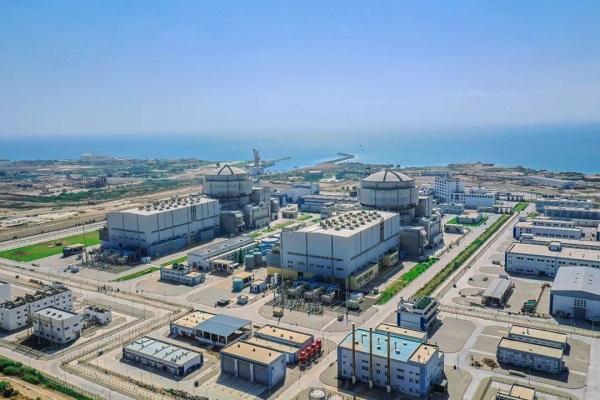
Secondary Circuit Fluid Purification for Karachi K2/K3 Nuclear Power Units
Application: Nuclear Power Generation
System: Secondary Circuit Fluid Purification
Project: Karachi K2/K3 Nuclear Power Plant
Year: 2018
Application Background
Karachi K2/K3 is a large-scale nuclear power project in Pakistan, providing a stable source of low-carbon electricity for the local power grid.
In 2018, we designed and supplied fluid purification equipment for the secondary circuit systems of the conventional island at the K2/K3 units.
The solution was applied to key water-treatment processes associated with the condensate system and evaporator feedwater system, with the objective of maintaining high-quality process water and supporting the long-term reliable operation of the secondary circuit.
The Problem
Water quality in the secondary circuit is critical to the safe and stable operation of nuclear power generation equipment.
During long-term operation, particulate impurities and corrosion products in the water system may contribute to:
- Deterioration of condensate and feedwater quality
- Valve sticking and impaired valve operation
- Potential fouling or contamination of heat-transfer surfaces
- Increased risk of heat-transfer tube leakage
- Additional operational and maintenance requirements
- Challenges in maintaining stable secondary-cycle water quality
For a large nuclear power unit operating continuously, effective fluid purification is therefore essential for controlling impurities and protecting critical components within the secondary circuit.
The Solution
We designed and supplied a customized fluid purification system for the conventional-island secondary circuit of the K2/K3 units.
The system was configured to treat water from key sections of the condensate and evaporator feedwater processes, helping remove particulate contaminants and corrosion-related impurities from the fluid.
Key solution features:
- Customized system design for the K2/K3 secondary circuit
- Condensate and feedwater purification
- Removal of particulate and corrosion-related impurities
- Improved water quality in critical secondary-cycle systems
- Protection of valves and heat-transfer equipment
- Continuous purification to support long-term plant operation
The solution helped maintain cleaner process water, reduce the potential impact of impurities on critical equipment, and support reliable water-quality control during continuous operation.
Project Impact
Following commercial operation, the K2/K3 units have provided a significant source of electricity for the local power system.
The project has contributed to:
- Stable electricity generation for the local community
- Improved secondary-circuit water quality management
- Enhanced protection of valves and heat-transfer equipment
- Reduced potential risks associated with water-borne impurities
- Support for long-term and reliable nuclear power generation
According to the project’s reported operational benefits, the units have generated nearly 20 billion kWh of electricity cumulatively, equivalent to the annual electricity demand of approximately 2 million people.
The associated environmental benefits have also been estimated to be equivalent to the planting of approximately 140 million trees.